Quokka Setonix brachyurus

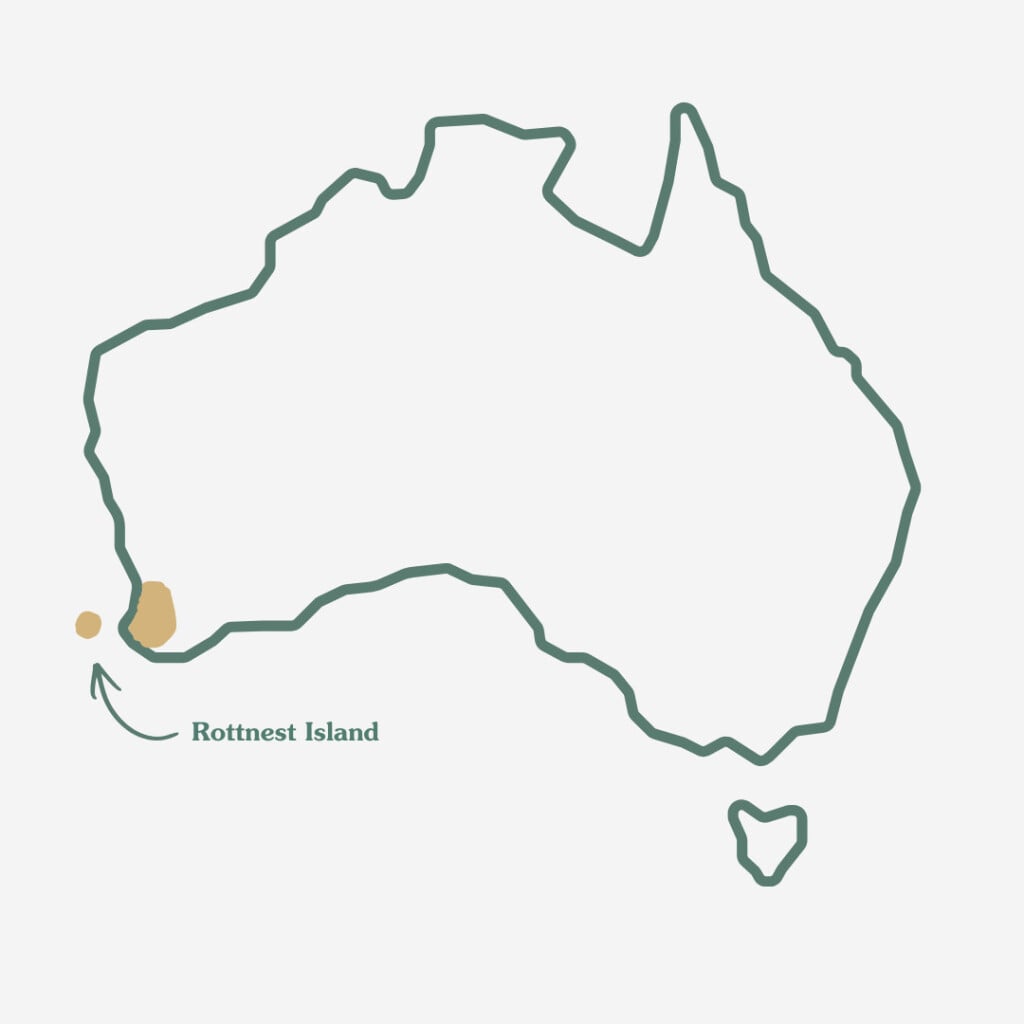
Found primarily on Rottnest Island and in isolated pockets of South West Western Australia, the quokka (Setonix brachyurus) is a small, herbivorous macropod. As the only member of the genus Setonix, they have evolved specific adaptations to survive in diverse environments ranging from thick coastal bushland to semi-arid shrub land. They play a vital role in their ecosystem by dispersing seeds through their foraging habits.
Quokka Species Profile
Physical Characteristics
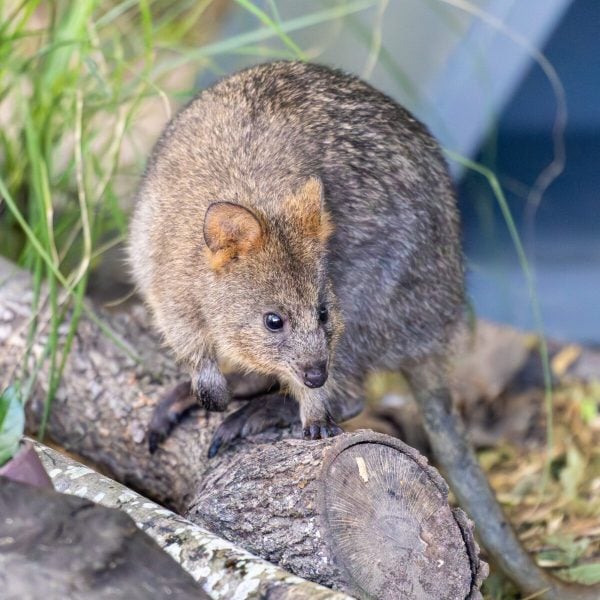
The quokka is a compact macropod with a stocky build and thick, coarse grey-brown fur. They are distinguished by their short, rounded ears, a black nose, and a relatively short, tapered tail. Unlike many other kangaroo species, their tail is not used for balance while hopping; instead, it serves as a site for fat storage. Their hind legs are powerful for moving through dense scrub, while their front paws are dexterous enough to manipulate small food items.
Behaviour & Social Dynamics
Quokkas are primarily nocturnal or crepuscular, meaning they are naturally most active at dawn, dusk, and throughout the night. While they can be found in loose social groups where resources are plentiful, male quokkas are naturally territorial and highly defensive over their space and food. To ensure the highest welfare standards and prevent conflict, males are housed individually at the sanctuary. This practice follows industry recommendations from the Zoo and Aquarium Association (ZAA) to prevent the sparring and injuries that can occur when males are housed together.
Habitat & Diet
This species is found in the coastal heathlands, forests, and shrublands of Southwest Western Australia, with the largest and most famous population residing on Rottnest Island. They prefer areas with dense undergrowth or “runways” through thick vegetation, which provide protection from the sun and predators. On the mainland, they are often restricted to riparian areas (near water) with heavy cover. At the sanctuary, our quokka exhibits are designed to mirror their natural habitat, providing ample shade and protected resting areas that allow them to retreat and rest comfortably.
Conservation Status
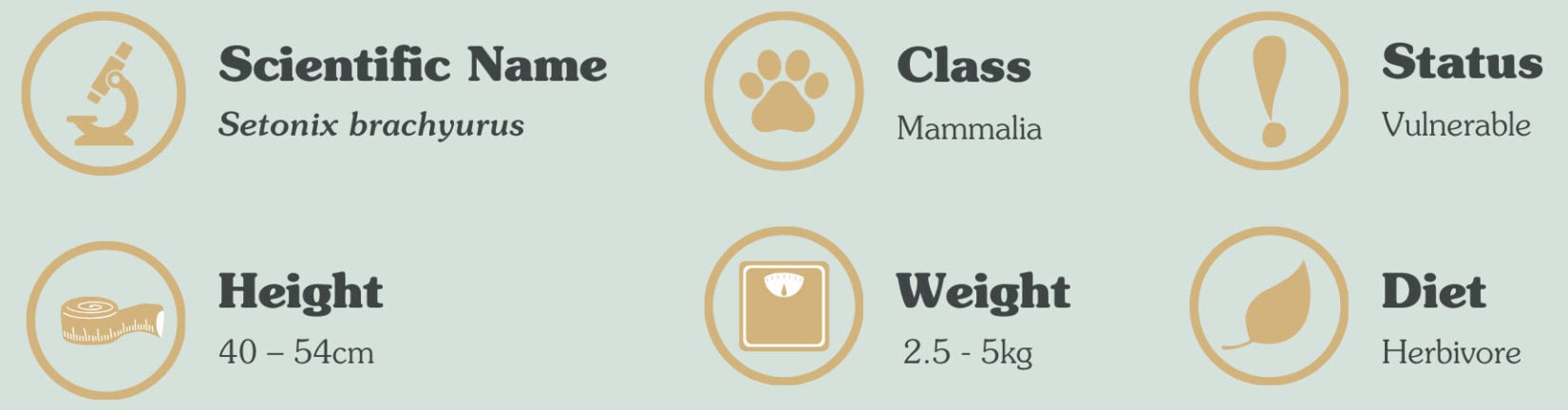
The quokka is currently listed as Vulnerable. While the island populations are stable, mainland quokkas have faced a significant decline due to habitat clearing and predation by introduced species, specifically foxes and feral cats. Conservation efforts focus on managing these invasive predators and protecting the remaining mainland forest pockets. It is estimated that the total wild population consists of approximately 10,000 to 15,000 individuals, with the majority living on Rottnest Island.
Learn More Quokka Fun Facts
★ In 1696, Dutch explorer Willem de Vlamingh described the quokka as “a kind of rat as big as a common cat.” This led him to name their island home Rotte nest (meaning “Rat’s Nest”), which evolved into the name Rottnest Island.
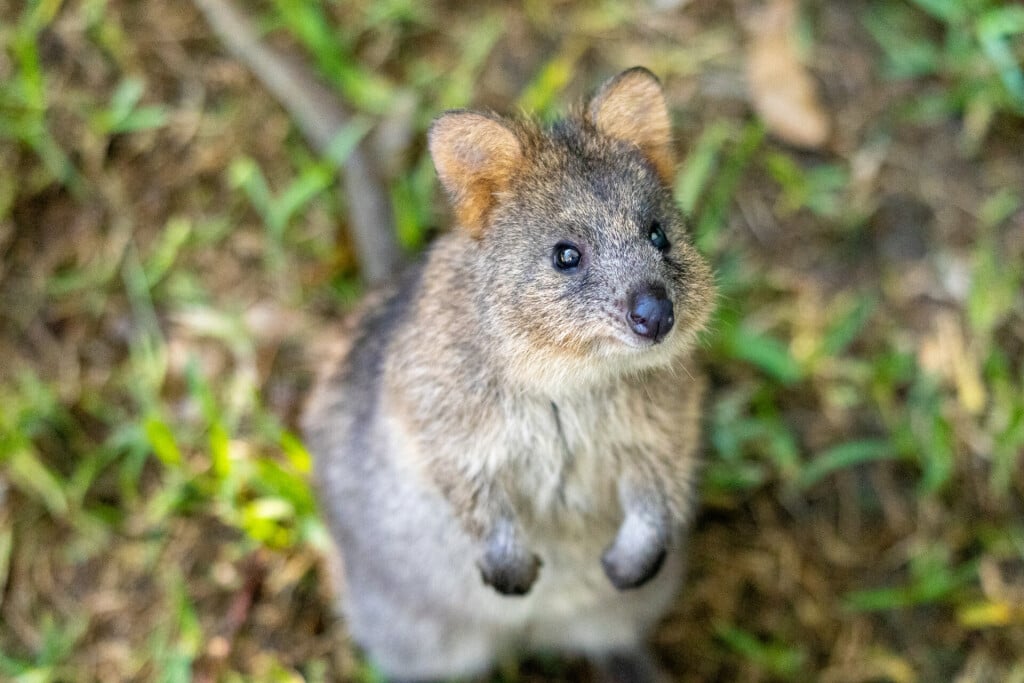
★ The quokka’s famous “smile” is actually a biological adaptation. It is a result of their narrow jaw structure and protruding front teeth, which are evolved for pulling and grinding tough, fibrous vegetation. It also helps them pant to dissipate heat.
★ Quokkas are masters of hydration; they can survive for months without drinking standing water by extracting moisture from succulent plants and “recycling” urea through their kidneys to prevent fluid loss.
★ Despite being ground-dwellers, quokkas are surprisingly agile and have been observed climbing small trees and shrubs up to two meters high to reach fresh leaves and fruits.
Come Visit Our Quokka!
VISIT ME DAILY
Come meet Quincy, our resident quokka right here in Brisbane at Lone Pine Koala Sanctuary!
Quincy joined Lone Pine Koala Sanctuary from Sydney Zoo in late 2025. As a species ambassador, he helps visitors learn about the quokka’s unique adaptations and the conservation challenges they face in the wild.
You can find Quincy in the Kangaroo Reserve (number 37 on our sanctuary map) daily between 9:00am and 4:30pm.

Est. 1927
The world's oldest & largest koala sanctuary
Visit Lone Pine Koala Sanctuary and immerse yourself in the beauty of koalas and their natural habitat.